
How to Monitor and Track Your Fitness Progress Effectively
November 01, 2026
When it comes to fitness, consistency is important, but knowing whether your efforts are paying off can make all the difference. Whether you're training for a race, improving cardiovascular endurance, trying to lose weight, or simply building a healthier lifestyle, tracking your progress helps you understand what's working and where adjustments may be needed.
Fortunately, monitoring your fitness journey doesn't have to be complicated. From wearable technology and fitness apps to simple workout journals, there are plenty of ways to measure your achievements and stay accountable.
Here's how to track your fitness progress effectively and use that information to make every workout count.
1. Start with Clear, Measurable Fitness Goals
Before you begin tracking your progress, it's important to establish what you're working toward. General goals like "get in shape" or "exercise more" can be difficult to measure. Instead, focus on specific, achievable objectives.
For example:
- Improve endurance: Increase your treadmill running time from 20 to 30 minutes over six weeks.
- Build cardiovascular fitness: Complete a 30-minute elliptical workout at a higher resistance level while maintaining a similar perceived effort.
- Increase workout consistency: Exercise four days per week for the next two months.
- Improve running performance: Reduce your average mile time or complete a 5K at a faster pace.
- Increase daily activity: Gradually raise your average daily step count.
Setting measurable goals gives you a clear starting point and allows you to recognize meaningful improvements along the way.
Tip: Focus on one or two primary goals at a time. Trying to improve every aspect of fitness simultaneously can make it harder to identify what's actually working.
2. Use Fitness Trackers and Wearable Technology
Fitness trackers and smartwatches have transformed the way people monitor physical activity. Devices from Garmin, Apple, Fitbit, and other manufacturers can provide valuable insights into workout performance and daily activity.
Depending on the device, common metrics include:
- Heart rate: Monitor cardiovascular effort during exercise.
- Workout duration: Track how much time you're spending being active.
- Distance and pace: Measure running, walking, and cycling performance.
- Steps and activity levels: Understand your overall daily movement.
- Estimated calories burned: Get a general sense of exercise energy expenditure.
- Sleep and recovery metrics: Identify patterns that may affect workout readiness.
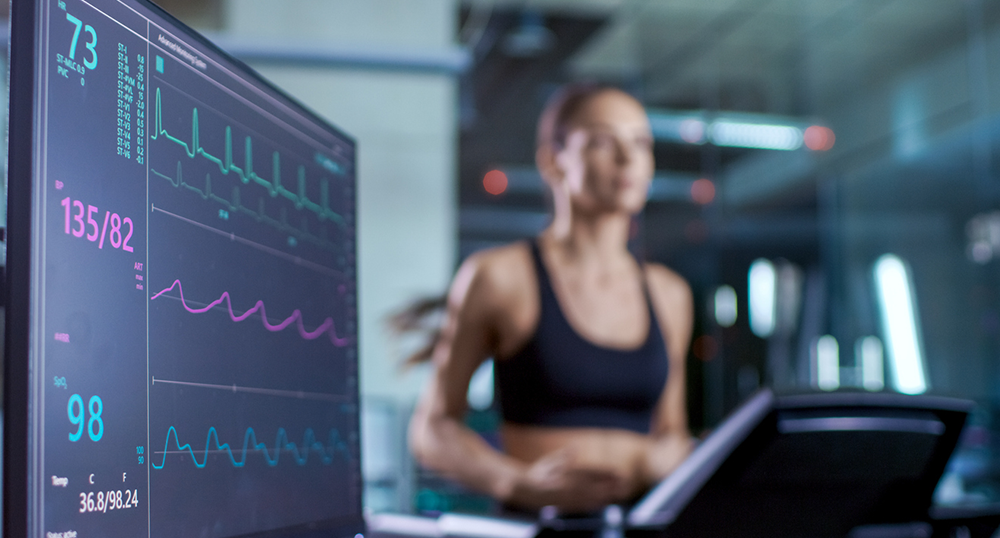
One particularly useful metric is heart rate. Tracking your heart rate during similar workouts over time can help you evaluate changes in cardiovascular efficiency.
For example, if you can maintain the same treadmill pace at a lower heart rate than you did several weeks earlier, that may indicate improved aerobic fitness, assuming conditions are comparable.
However, wearable data isn't perfect. Calorie estimates, sleep measurements, and even heart rate readings can vary in accuracy. Use these tools to identify trends rather than treating every measurement as an exact result.
3. Track Your Performance on Cardio Equipment
One of the advantages of exercising on indoor fitness equipment is the ability to repeat workouts under relatively consistent conditions.
Unlike outdoor exercise, where weather, terrain, and traffic can affect performance, treadmills, ellipticals, and exercise bikes allow you to control important workout variables.
This makes it easier to compare your progress from week to week.
Treadmill Progress Tracking
When using a Landice treadmill, consider monitoring:
- Distance covered during each workout
- Average speed or running pace
- Incline settings
- Total workout duration
- Heart rate and perceived exertion
For example, perhaps you begin by walking for 30 minutes at 3.5 mph with a 2% incline. After several weeks, you may find that you can maintain the same speed at a 4% incline without feeling significantly more fatigued.
That's measurable progress, even if the number on the scale hasn't changed.
Elliptical Progress Tracking
With a Landice elliptical, resistance levels, workout duration, and heart rate can help you monitor improvements in endurance and exercise capacity.
You might notice that you're able to complete a longer session, increase resistance, or maintain a higher intensity while feeling more comfortable.
Exercise Bike Progress Tracking
For those using a Landice exercise bike, tracking resistance, cadence when available, and workout duration can provide useful performance benchmarks.
For example, increasing resistance while maintaining a steady cadence may indicate improving muscular endurance and cardiovascular conditioning.
The key is consistency: Compare similar workouts using the same equipment and settings whenever possible. This makes it easier to identify meaningful changes in your performance.
4. Keep a Workout Journal or Digital Fitness Log
You don't need sophisticated technology to monitor fitness progress. A simple workout journal can be one of the most effective tools available.
Recording your workouts helps you recognize patterns that might otherwise go unnoticed.
Consider tracking the following information:
|
Metric |
Example |
|
Workout date |
November 15 |
|
Exercise type |
Treadmill running |
|
Duration |
30 minutes |
|
Distance |
3 miles |
|
Average heart rate |
145 bpm |
|
Incline |
1% |
|
Perceived effort |
6 out of 10 |
|
Notes |
Felt stronger during the final 10 minutes |
Over time, these records can reveal improvements in endurance, consistency, and overall workout capacity.
Digital tools such as Strava, Garmin Connect, Apple Health, and other fitness platforms can also help organize activity records and visualize trends.
Choose a tracking method that fits naturally into your routine. The best system is one you'll actually use.
5. Monitor Progress Beyond the Scale
Weight can be one indicator of fitness progress, but it doesn't tell the whole story.
In fact, some of the most meaningful improvements may have little to do with body weight.
Consider tracking:
Cardiovascular endurance: Can you exercise longer without becoming as fatigued?
Workout recovery: Does your breathing return to normal more quickly after a challenging session?
Strength and stamina: Can you handle higher resistance levels or longer workouts?
Energy levels: Do you feel more energetic throughout the day?
Workout consistency: Are you exercising more regularly than you were a few months ago?
Everyday activities: Is climbing stairs, walking longer distances, or carrying groceries becoming easier?
These improvements are important indicators that your fitness routine is contributing to your overall health and physical capabilities.
Remember that progress isn't always linear. Some weeks will feel easier than others, and temporary plateaus are a normal part of training.
6. Understand the Value of Heart Rate Zones
Heart rate monitoring can provide additional insight into workout intensity.
Rather than focusing exclusively on speed or distance, heart rate zones help you understand how hard your cardiovascular system is working.
A simplified breakdown includes:
- Low intensity: Comfortable movement, warm-ups, and recovery sessions.
- Moderate intensity: Sustainable aerobic exercise that supports cardiovascular endurance.
- Vigorous intensity: More demanding workouts that challenge aerobic capacity.
- High intensity: Shorter, strenuous efforts that generally require more recovery.
For example, someone looking to build endurance may benefit from spending much of their training time at a comfortable, sustainable aerobic intensity, while incorporating occasional higher-intensity sessions when appropriate.
Keep in mind that heart rate zones calculated by fitness devices are estimates. Age, fitness level, medications, and individual physiology can affect heart rate responses.
Pairing heart rate data with the talk test or a perceived exertion scale can provide a more complete picture of workout intensity.
7. Review Your Progress Weekly and Monthly
Collecting workout data is helpful, but reviewing it regularly is what turns information into meaningful action.
Set aside a few minutes each week to evaluate your activity.
Ask yourself:
- Did I meet my planned workout frequency?
- Am I exercising longer or at a higher intensity?
- Have my pace, distance, or resistance levels improved?
- How am I feeling during and after workouts?
- Am I allowing enough time for recovery?
Monthly reviews can help identify broader trends.
For example, you might discover that your average treadmill running pace has improved over eight weeks or that you've increased your elliptical workout duration from 20 to 40 minutes.
These achievements can be powerful motivators, particularly when progress feels slow on a day-to-day basis.
It's also important to recognize when the data suggests you should adjust your training. Persistent fatigue, declining performance, or difficulty recovering may indicate that additional rest or a reduction in workout intensity is needed.
8. Use Progress Tracking to Stay Motivated
One of the greatest benefits of fitness tracking is the motivation that comes from seeing improvement.
When you can look back and recognize how far you've come, it's easier to stay committed to your routine.
Try setting smaller milestones along the way to your larger fitness goals.
For example, if your objective is to run continuously for 45 minutes, celebrate reaching 20, 30, and 40 minutes along the way.
You can also create personal challenges, such as completing a certain number of workouts each month or gradually increasing the distance you cover during a standard cardio session.
Just remember that progress should be measured against your own starting point, not someone else's performance.
Your fitness journey is personal, and even small improvements are worth recognizing.
9. Make Your Fitness Equipment Part of Your Tracking Strategy
Having reliable exercise equipment at home can make tracking your progress easier and more consistent.
Landice treadmills, ellipticals, and exercise bikes provide controlled workout environments where you can monitor performance and progressively adjust your training.
Whether you're increasing treadmill incline, challenging yourself with greater elliptical resistance, or building endurance on an exercise bike, the ability to repeat and compare workouts provides valuable feedback.
Depending on the model and console configuration, available workout metrics and connectivity features may vary. Pairing equipment-based workout information with a fitness journal or compatible tracking tools can help create a more complete picture of your progress.
Most importantly, having convenient access to quality fitness equipment removes many of the barriers that can interfere with consistent exercise.
And consistency remains one of the most important factors in achieving long-term results.
The Bottom Line: Measure Progress, Not Perfection
Tracking your fitness progress isn't about analyzing every number or pushing yourself harder during every workout. It's about understanding your performance, recognizing improvements, and making informed decisions that support your long-term health.
Whether you prefer a smartwatch, fitness app, workout journal, or the performance metrics available on your cardio equipment, choose a tracking approach that works for you.
Focus on consistency, celebrate meaningful milestones, and remember that progress can take many forms.
Ready to take the next step in your fitness journey?
Explore the full lineup of Landice treadmills, ellipticals, and exercise bikes at Landice.com and discover how a consistent home fitness routine can help you work toward your goals.